The John Barber blog
Fine Hair for Men: Which Cut to Choose and How to Manage It
The John Barber blog · John Barber ·

At the barbershop it happens often: “I don’t have much hair.” Then we take a closer look and the problem is something else. The hair is there, but it’s fine and tends to fall flat as soon as you try to style it. The first temptation is to use more product, comb it back or ask for a very short cut. Sometimes it works. Other times, after half an hour, the hair has already gone right back to where you didn’t want it. The solution isn’t necessarily shaving it off. It’s choosing a shape that suits your hair and no longer asking it to behave like a completely different head of hair.
Fine hair doesn’t necessarily mean thinning hair
Fine hair has a thin strand. Thinning hair, on the other hand, is less dense in some areas or across the whole scalp. The two can coincide, but they are not the same thing. If you’ve always had fine hair, the goal is to understand how to enhance it. If instead you’ve noticed a recent change in density or hair loss, your barber can help you manage your look, but to understand what is happening it’s best to speak with a dermatologist.
Which cut should you choose?
There is no one cut that works for everyone. What matters is density, growth direction, face shape and a very practical question: how much time do you want to spend in front of the mirror every morning?
- Crop with soft texture. The top keeps enough length to create movement, while the sides and nape stay cleaner. The texture must be controlled: thinning too much can remove support and make the hair look even lighter.

- Short cut with graduated fade. It’s practical and neat, but it doesn’t necessarily have to be shaved on the sides. A well-blended fade lets you work on proportions without creating too sharp a contrast with the top.
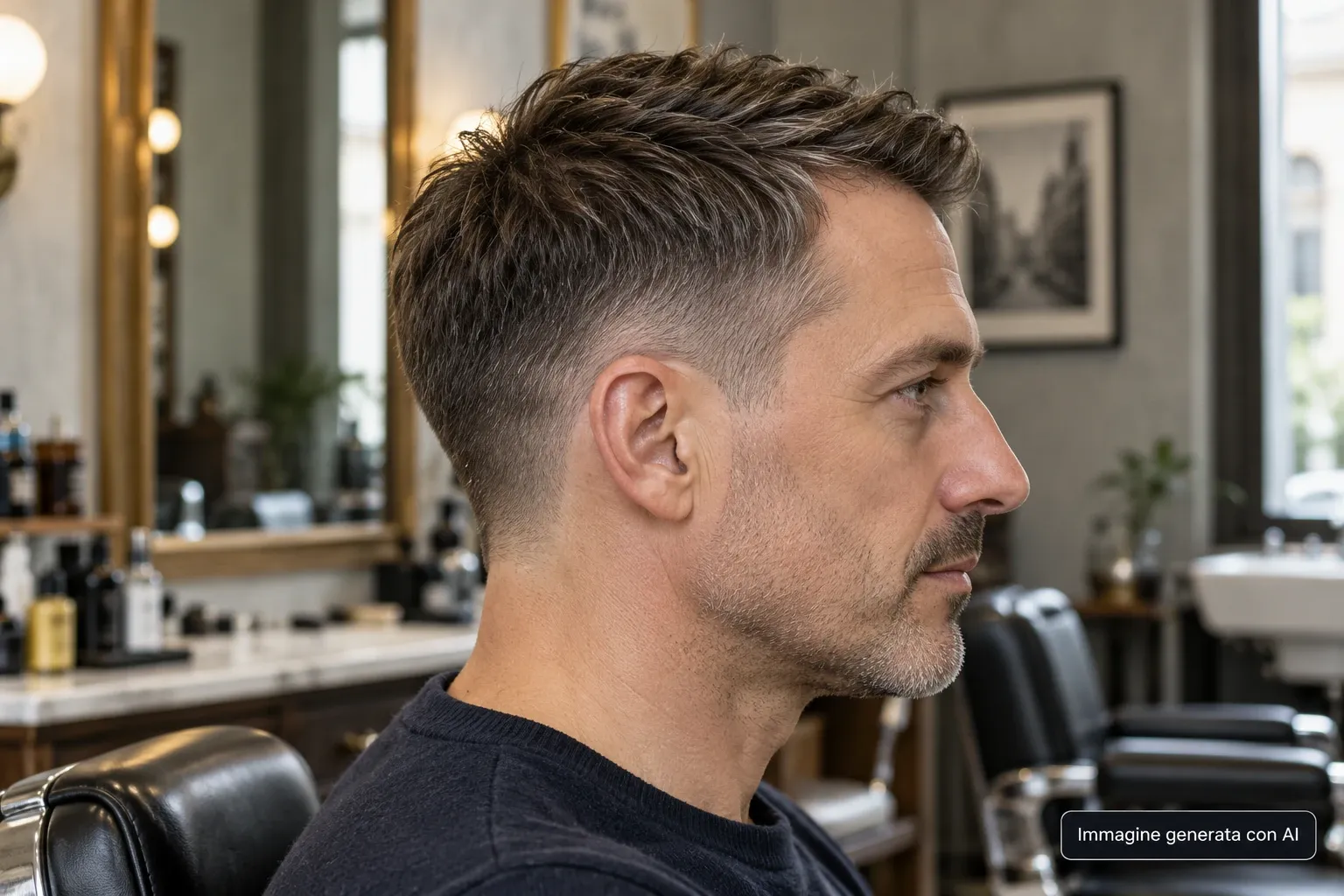
- Natural medium-short length. If the hair is fairly even, you can keep a little more length. However, the cut needs a precise shape: letting hair grow without direction doesn’t add volume. It only adds a few minutes of indecision in the morning.

The point isn’t to thin everything out
With fine hair it’s tempting to think that removing weight will give more volume. But if you take off too much, the hair can lose its support and the shape becomes hard to maintain. Instead, it’s important to understand where to keep density and where to create movement. The difference doesn’t only show right after leaving the barbershop: it also shows after a few washes, when the hair still has to look good in everyday life.
Styling: little product, applied well
With fine hair, the amount matters a great deal. Too much product weighs it down; too little, or the wrong one, doesn’t help create shape. It’s best to start with a small amount of light, matte product, work it well between your hands and add more only if needed. Drying can make a difference too. Pat the hair without rubbing it and, if you use a hairdryer, choose a moderate heat setting. Gently lifting the roots with your fingers helps avoid flattening the hair. Excessive heat and rough handling can damage hair; dermatologists recommend handling it gently, especially when it’s wet.
How to explain to your barber what you want
A photo can be useful, but it isn’t enough: that cut may have been done on thicker hair, or it may require styling you don’t intend to do every day.
Explain what happens to your hair when you wash it and how you usually style it. You might say, for example: “I’d like to keep a natural shape, without having to use a lot of product.” From there, you can work out together how much length to leave, where to thin and how to blend the sides.
The right cut shouldn’t make your hair look like someone else’s. It should work on yours. If you have fine hair and can’t find a shape that convinces you, come to John Barber in Milan. We start from your hair, how you wear it and how much time you want to give it each day.