The John Barber blog
The white beard: 5 style tips
The John Barber blog · Eleonora Boretti ·

How to make the most of it, with style, care and awareness
As time goes by, many men start to notice the first white hairs appearing among their beard hairs. It is a natural process, often inevitable, but that doesn’t mean the end of confidence or of your style. On the contrary, a white beard can become a symbol of elegance, maturity and charisma.
In this article you will find out how to turn a white beard from a simple sign of time into a real distinguishing feature, with practical advice and care strategies designed to keep it at its best.
Why does a white beard deserve attention?
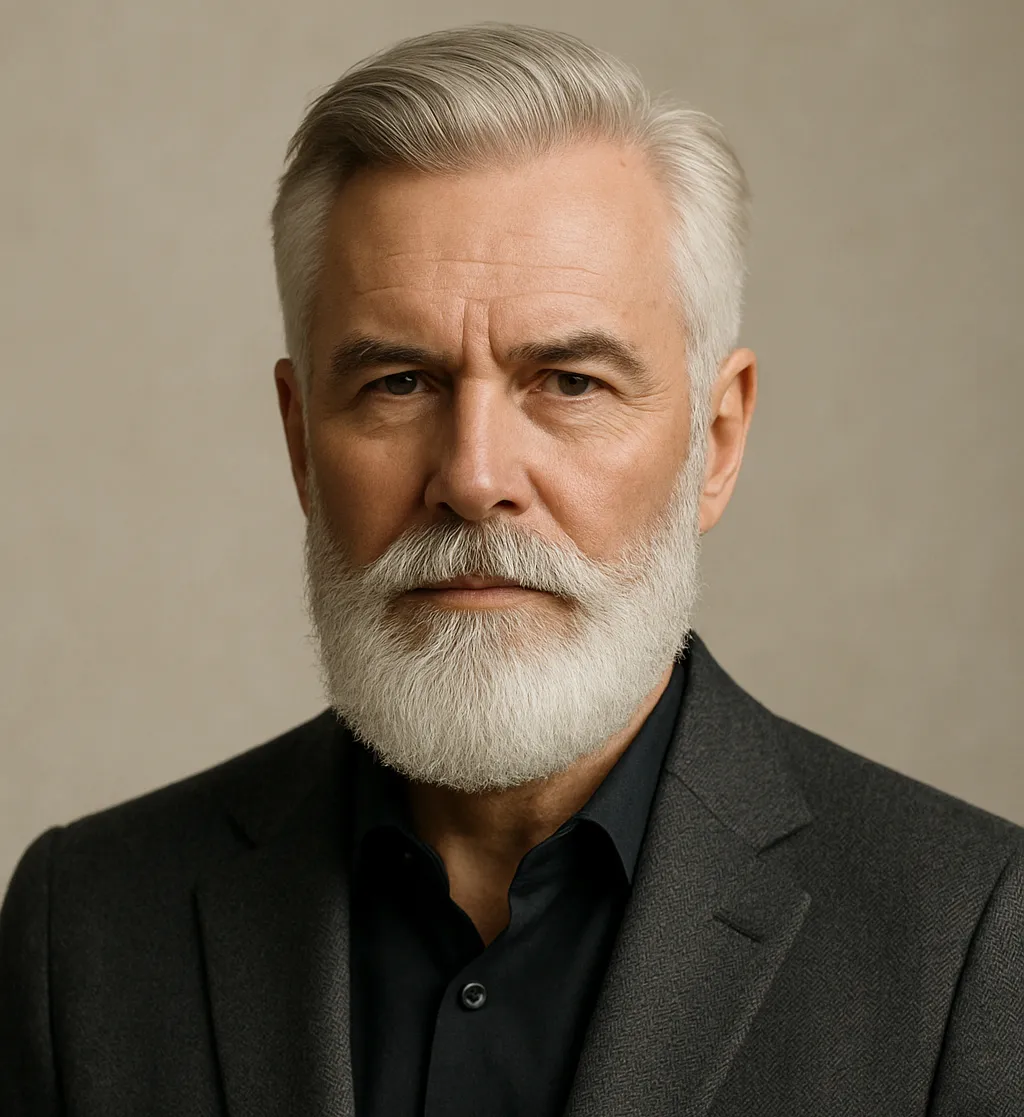
A white beard is not just a matter of looks: it is also a sign of physiological change. As melanin is lost, hairs become lighter, but also finer, drier and more fragile. That calls for a different care routine from the one you used in the past. And the risk of looking scruffy, or worse, of being compared to Santa Claus out of season, is around the corner if you don’t pay attention to the shape, length and texture of the beard.
Haircut + Italian-style beard shave combo →
1. What length and shape suit a white beard?
A white beard that is too long and unkempt can evoke mythical characters such as Merlin or Gandalf, especially in winter. On the other hand, a beard that is too short risks highlighting gaps or irregularities, since white hairs tend to be sparser and less pigmented.
The right balance is usually between 5 and 15 centimetres in length. In this range the beard is long enough to give even coverage, but not so long as to look excessive.
As for shape, it helps to counter the natural softening of facial features (which comes with age) by opting for defined lines: squared, pointed or “boxed” beards help redefine the contours of the face, giving a more decisive look.
Luxury haircut + Italian-style beard shave combo →
2. How do you soften and hydrate a white beard?
A widespread belief is that white hairs are coarser. In reality, they are only drier. This happens because with age the sebaceous glands reduce the production of sebum, the natural oil that keeps skin and hair hydrated.
The result? A beard that is harder to manage, less elastic and prone to breaking. To avoid these problems it is essential to include moisturising and nourishing products in your daily routine:
- Softening balm: to use in the shower, ideally left on for a few minutes to work deeply. Some people choose not to rinse it out completely, applying it to a damp beard for a longer-lasting effect.
- Beard oil: apply every morning (and, if necessary, during the day too) to replenish natural lipids. The oil works on both the hair and the skin underneath, preventing itching and flaking.
- Leave-in balm: useful for the ends of the beard, which tend to dry out more. It has a slow-release conditioning effect, ideal for keeping softness all day.
Experimenting with different combinations of these products is essential to find the perfect routine, depending on the density and texture of your beard.
3. How do you give a white beard volume?
With the right texture. A white beard can look less full, sparser and more transparent than when it was pigmented. One way to give it body is to use a texturising spray based on natural salts, such as Dead Sea salt.
These products:
- Increase the perception of volume
- Give a light hold, useful for shaping the beard
- Bring out any natural waves or curls
Be careful, though: salt can have a slight drying effect, so it is best not to use it every day or to always combine it with moisturising products.
4. Why should you limit heat?
With age, hairs become finer and more porous, and so more vulnerable to heat. Daily use of straighteners or heated brushes can cause permanent damage to the shafts, with dryness, breakage or loss of shine as a result.
If you really don’t want to give up heat styling:
- Lower the temperature of your tools
- Limit the frequency of weekly use
- Keep a suitable distance between the hairdryer and the beard
- Use a heat protectant that is also suitable for facial hair
Heat styling should become the exception, not the rule.
5. How do you prevent yellowing?
One of the main challenges of a white beard is keeping it… white. Silvery hairs tend to absorb environmental impurities: smog, chlorine, smoke, sun and even hard water can give them a yellow or bronze tone.
To counter this:
- Use a purple shampoo: this type of shampoo contains pigments that neutralise yellow tones, leaving the beard brighter and cooler in tone.
- Avoid sulphates: found in many harsh shampoos, they can dry out and alter the natural colour.
- Always dry the beard well: residual moisture can encourage the build-up of minerals and impurities.
- Wear sun protection on your face or a wide-brimmed hat in summer.
For those who don’t yet have a completely white beard but want to even out the colour, professional bleaching can be considered. In that case, it is advisable to rely on an experienced professional to avoid damaging hair and skin.
A white beard is a style statement
Having a white beard doesn’t mean giving up your aesthetic identity, quite the opposite. With the right care it can become a distinctive element, full of charm and personality.
The secret is not to improvise: finding the right shape, using targeted products, avoiding too much heat and looking after the colour will let you make the most of your beard at every stage of life. And remember: a well-kept beard says far more than a thousand words, it speaks of self-care, conscious style and a desire to stand out with elegance.
Visiting Milan? John Barber has three barbershops in the city centre, open every day including Sunday. Our barbers can shape your white beard in person: book your seat.